The Post-Quantum Deadline for Federal Contractors Is Closer Than It Looks

An Executive Order signed in June directs the FAR Council to propose a rule requiring covered federal contractors to comply with applicable NIST Federal Information Processing Standards (FIPS), including the post-quantum cryptography (PQC) standards, by December 31, 2030. Those standards cover two functions: FIPS 203 (ML-KEM) for key establishment, and FIPS 204 (ML-DSA) and FIPS 205 (SLH-DSA) for digital signatures.
The specific standards that apply to a given system will depend on what that system does and on the final rule’s requirements. Not every contractor will need all three. That proposed rule is due by December 19, 2026.
Four years is not much time for this work. Contractors will need to find every place their products and systems use vulnerable cryptography, update or replace those components, and test the changes. Agencies and prime contractors are likely to ask for that information on their own schedules, and some solicitations may require PQC before any rule is final.
Two questions remain until the proposed rule is published: which contractors are covered, and whether contractors will have to move digital signatures to PQC a year before agencies must. Agencies' own PQC migration plans were due to OMB and the Office of the National Cyber Director on October 22, 2026.
Requirements in the Executive Order
The Executive Order, Securing the Nation Against Advanced Cryptographic Attacks, sets two deadlines for agencies' high-value assets and high-impact systems. Key establishment must move to PQC by December 31, 2030, and digital signatures by the end of 2031. OMB's implementing memo adds a phased schedule through full migration in 2035 and directs agencies to include PQC requirements in procurements.
For contractors, the order directs the FAR Council to publish two proposed rules.
- Within 180 days (before December 19, 2026), a rule requiring covered contractors to comply with applicable FIPS, including the post-quantum standards, by December 31, 2030.
- Within 270 days (before March 19, 2027), a rule on contractor vulnerability disclosure programs, including reporting of cryptographic vulnerabilities such as use of non-FIPS-approved algorithms.
The Executive Order gives contractors one compliance date (December 31, 2030) and does not separate key establishment from digital signatures. Agencies have until the end of 2031 for signatures. Depending on how the FAR Council writes the rule, contractors could face a signature requirement a year before agencies do.
The order does not define "covered contractor," so the scope will not be known until the proposed rule is published. Past FAR cybersecurity rules have applied to contractors whose work involves processing, storing, or transmitting federal information. FAR cybersecurity rules have often taken years to finalize. The basic safeguarding clause (FAR 52.204-21) was proposed in 2012 and finalized in 2016. Contractors that wait for a final rule may have well under three years to meet the 2030 date.
How Federal Agencies Are Faring
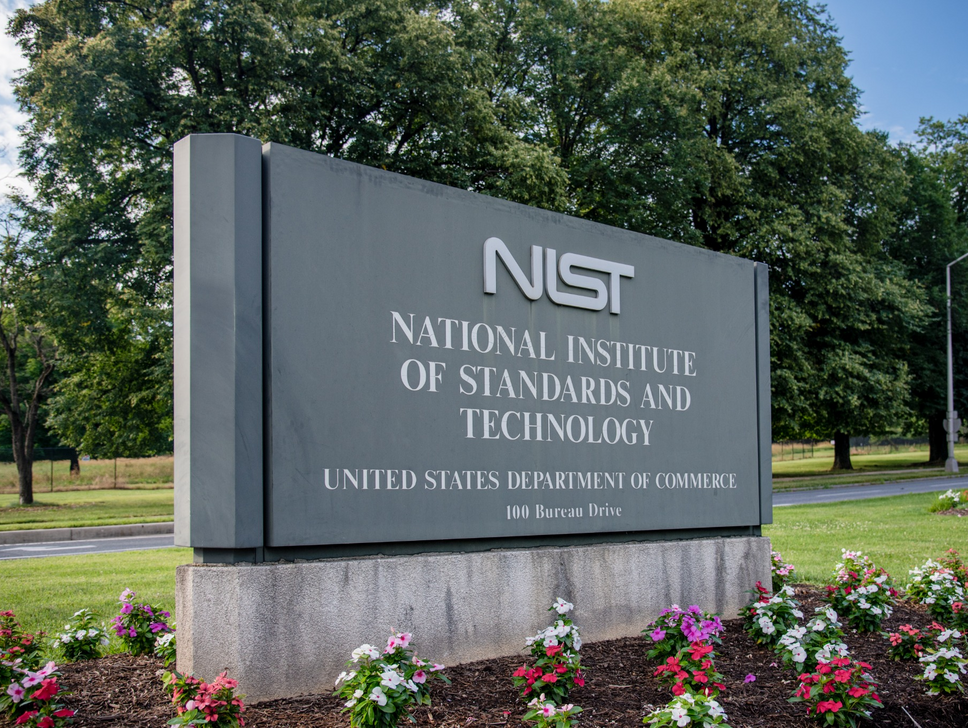
A Government Accountability Office report released in October found that none of the 24 Chief Financial Officer Act agencies had fully completed the preparatory steps in OMB guidance, including inventories of vulnerable cryptography. GAO attributed the gaps in part to a lack of cryptography expertise, a lack of processes for building cryptography inventories and identifying the funding the transition requires, and a lack of plans to guide PQC testing.
The report is the public version of a sensitive report GAO issued in September 2025, in which GAO made 89 recommendations to 23 agencies. It reflects agency conditions before the June Executive Order and the OMB memo. Inventories and funding estimates are part of the work OMB assigns agencies in Phase 1 (Strategy, Planning, and Discovery), which runs through 2027; testing follows in Phase 2, the pilot phase. Contractors that wait for a final rule to begin the same work will be starting years behind the agencies they sell to.
Implications for Contractors
- Agency cryptography inventories depend in part on information about the products and services vendors deliver. Contractors should expect requests for that information soon, and prime contractors may start asking their suppliers before any rule is final. Contractors that have not inventoried their own cryptography will have trouble answering.
- OMB has already directed agencies to include PQC requirements in procurements, and CISA published a list in January 2026 of product categories where PQC-capable products are widely available. Solicitations may include PQC requirements before the new rule takes effect, which would make PQC readiness a factor in new awards well before 2030.
- NIST finalized its post-quantum transition plan, NIST IR 8547, on October 27, 2026. It deprecates RSA and elliptic curve algorithms after 2030, disallows them after 2035, and says meeting those deadlines will require action by the technology providers on which federal systems depend. Agencies applying that guidance will be assessing vendor products along with their own systems.
- Smaller vendors may face higher relative costs to update products in time to remain eligible for federal work.
What to Watch
- Publication of the proposed FAR rule by December 19, 2026, including the definition of "covered contractor."
- Whether the proposed rule sets separate dates for key establishment and digital signatures for covered contractors.
- The proposed vulnerability disclosure rule released by March 19, 2027.
- Agency progress on meeting implementation deadlines required under the Executive Order.
Check back on the IonQ blog, as we will be sharing updates after the FAR Council publishes the proposed rule. To learn more about PQC migration timelines, see our recent blog on the four clocks of PQC migration.
If you found this article useful, subscribe to the Quantum for the Mission newsletter for monthly updates on policy, technology, and quantum news for federal stakeholders.

